17/10/2013

Otak-otak -- Taiping Lang Style

Hi there,

There are many ways to prepare "Otak-otak", a dish reputed to originate from the Nyonyas. However, mummy's style is from her mother from Taiping, so I named this dish, "Otak-otak -- Taiping Lang Style".  So I will show the ingredients and the methods used by mummy in pictorial form.  The pictures are self explanatory and just by looking at the pictures, you will understand how to cook this dish. There is no hard and fast rules here. If not all the ingredients are available, never mind. As long as the main ingredients are there, then the dish would taste like the real thing. The main ingredients are:
(1) Fish. Any type of fish will do, as long as there are not too many bones.
(2) Gado-gado leaves. This is a must, in order to get that special taste. Some people don't like the smell of this type of leaves. Then they have not experienced the real otak-otak - Taiping Lang style.
(3) Spices: Lemon grass, gelangga, yellow ginger (Not too much!), small onions, candle nuts, dried chilli, and coconut suntan.  The amount of spices is up to individual taste.

 
The following pictures should give you an idea of how to cook "Otak-otak" I start it off, by showing you some of the ingredients that you will need. Please read the captions to understand the procedure of cooking this dish.


Picture 1.  Small onions. These must be peeled and washed. Then put aside to be blended later.

Picture 2.  You will also need dry chilli, candle nuts and fresh yellow ginger.

Picture 3.  This is Galangga. Choose the young shoots. Clean, peel and cut into smaller pieces for easy blending.

Picture 4. You will need RM2.00 fresh coconut milk.


Picture 5. You will need 6 sticks of lemon grass. Clean and cut into smaller pieces for easy blending.


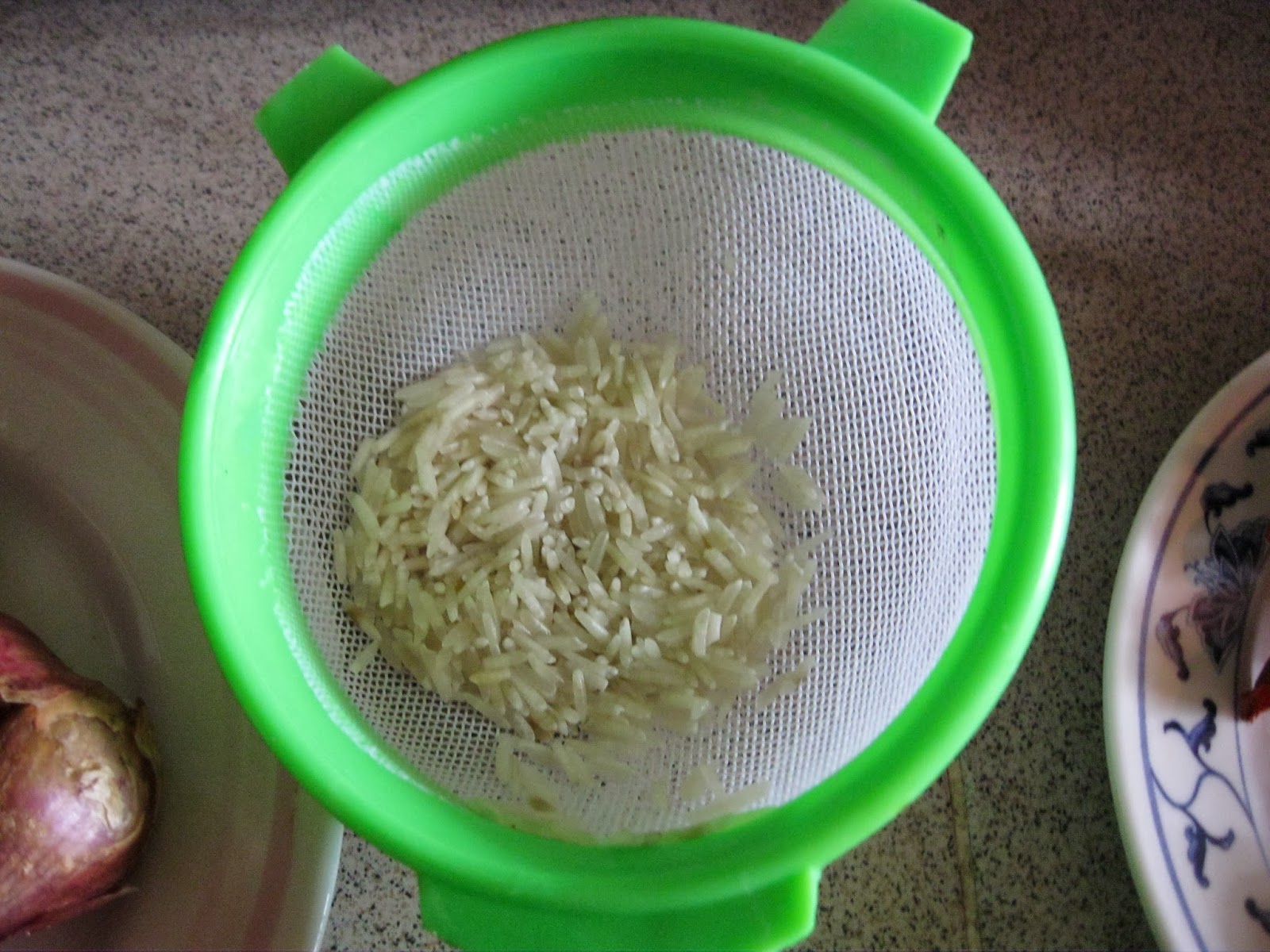
Picture 6.  You will need some ordinary white rice, about half a cup, to be blended into liquid. Washed and put aside.

Picture 7. Boil the dry chilli until soft for easy blending. Remove the seeds if you don't want the dish to be too hot.

Picture 8.  This shows you the size of the fresh yellow ginger that you will need, and no more.

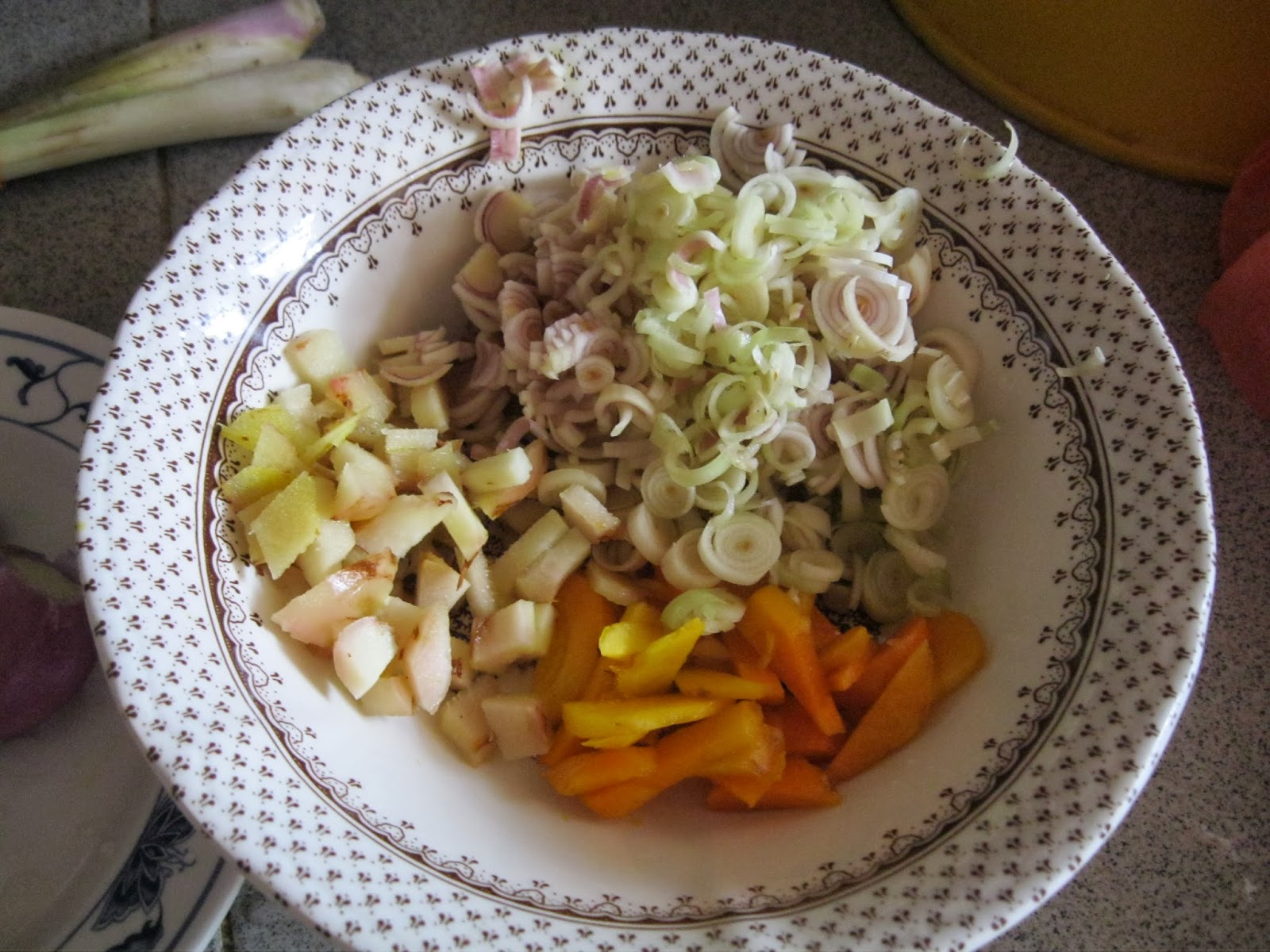
Picture 9.  This shows you the cut lemon grass, yellow ginger and galangga, for easy blending.

Picture 10. The small onions peeled and washed, ready to be blended.

Picture 11. This is the small blender that I used. I am blending the hard ingredients first, the lemon grass, candle nuts, yellow ginger, galangga and the small onions.The washed rice can be blended separately to get a better result.

Picture 12. This is the result of the first blending of the spices.

Picture 13.  Blending the dried chilli that has been boiled and some of the seeds removed.

Picture 14. The result of the blended chilli. Just use what you need, the rest can be stored and used later for something else.

Picture 15. This is the fish that we are going to use. About 1.5kg grouper from the main market. Remember, if you want to cook a bigger fish or more, you must also increase the other ingredients too.

Picture 16. Mummy asked me to fillet the fish and just use the flesh without the bones. Easier to eat.  Less messy.

Picture 17. Cut the fillets into smaller pieces for easy picking.

Picture 18. This is the "Daun Gado-gado" that must be used to get the typical flavour, aroma and taste of Otak-otak. Without these leaves, the taste is not there. Some people may not like the taste of these leaves.

Picture 19. You can grow this plant quite easily in a pot. It is a creeping plant. You can see the vine below the pot. Grow a few pots if you like. The plant will take some time to grow new leaves, once you harvest them for your Otak-otak.

Picture 20. The fillets have been cut into bite size and put aside.

Picture 21. The blended spices and all the other stuff are put into a mixing bowl and stir.

Picture 22. Add in the coconut suntan into the mixture and stir.

Picture 23. The mixture is been stirred slowly as the coconut suntan is been added.

Picture 24. Don't forget to add some salt!

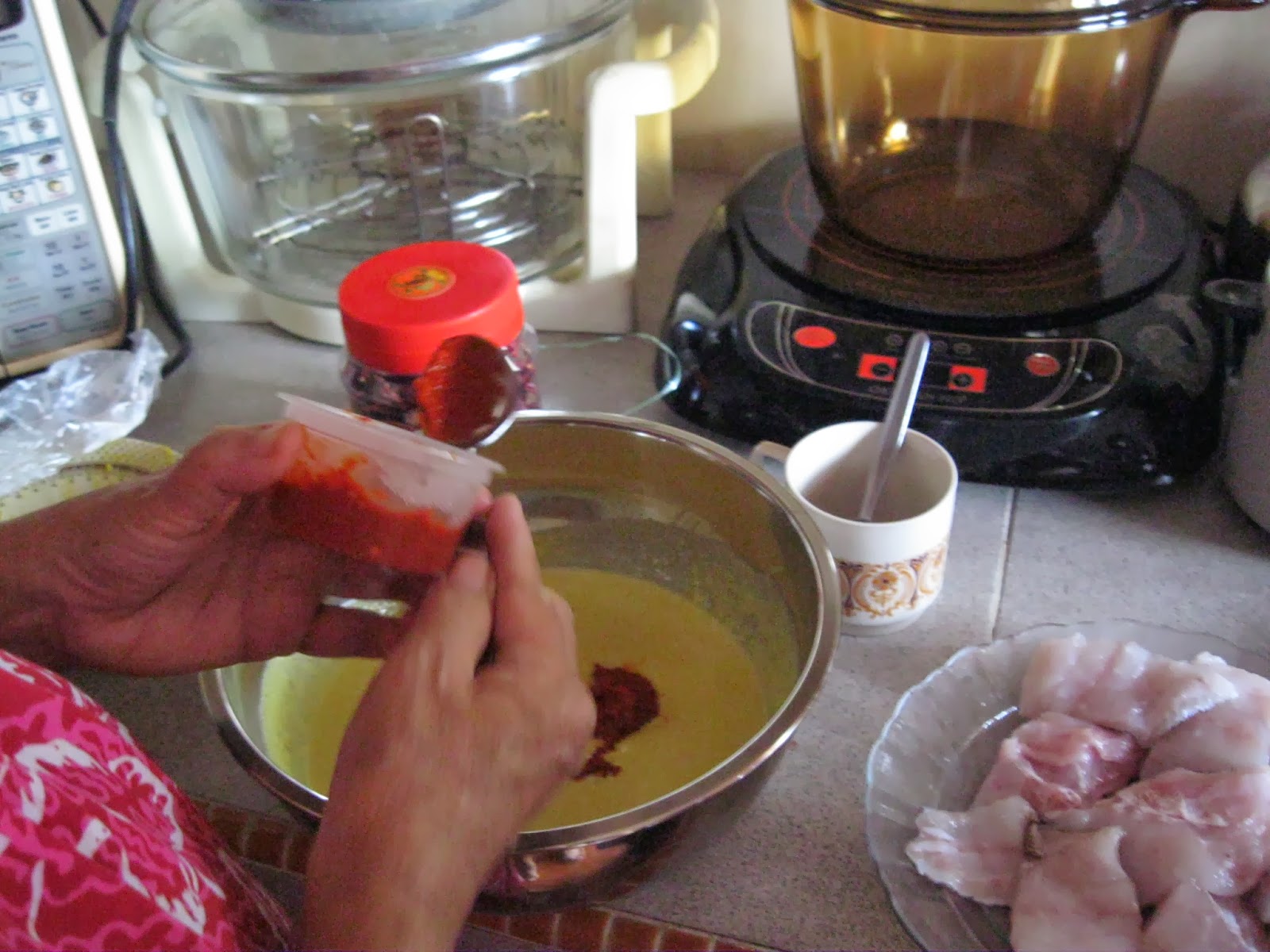
Picture 25. Now you can add in the chilli according to your taste. Less chilli if children are eating too.

Picture 26. After adding the chilli, stir the mixture well.

Picture 27. Crack an egg, beat it and add it into the mixture. You can skip this egg if you don't like eggs.

Picture 28. Beat the egg good and proper.

Picture 29. Pour the egg into the mixture.

Picture 30. After adding the egg, stir the mixture again.

Picture 31. Now you can add in the fish pieces.

Picture 32. After adding in the fish, stir the whole thing again, so that the fish is completely coated with the spices.

Picture 33. Leave the fish to marinate for some time, say about half an hour to an hour.

Picture 34. Keep the marinating fish in the fridge for an hour or whenever you are ready to cook.

Picture 35. The fish in the fridge. Note the kefir drink by the side.

Picture 36. Line the steel plate with gado-gado leaves and arrange the fish pieces on top of the gado-gado leaves, around the plate.

Picture 37. Mummy arranging the fish on the steel plate, using a large spoon.

Picture 38. You can see the pieces of fish arranged on the steel plate on top of the gado-gado leaves.

Picture 39. The balance of the spices is then pour over the fish, covering them.

Picture 40. Then using a special tong, lift the steel plate and bring it to the steamer, as shown below.

Picture 41. Mummy putting the prepared fish into the hot steamer. You can start heating the steamer while preparing the fish, so that the steamer will be ready when you have finished preparing the fish..

Picture 42. Steam for half an hour to 45 minutes.

Picture 43. The finished product! Ready to be eaten!

Picture 44.  A close-up of the finished product.

Picture 45. Otak-otak on the table.

Picture 46. After saying graces, we are going to eat.

Picture 47. Annette is taking the first scoop of the otak-otak.

Picture 48. Mummy is taking the second scoop!
I hope you will try this out and enjoy this dish as much as we do. Whenever mummy cooks this dish, it is a real treat and we always look forward to eating it. If you have not any gado-gado leaves in your garden, don't worry. This is a very common "weed" which can be seen in the wild. If you are lucky, you may even find them in your neighbour's backyard.

Pa.

16/10/2013

Tao Yew Bak

Hi there,

Here is a recipe for Tao Yew Bak, one of mummy's signature dishes and a favourite among all the children. This time, mummy has taught Annette how to cook the dish.  Before that here are the ingredients:

(1) One kilogramme of pork belly meat cut into one inch thick. You can ask your butcher to slice the pork belly into one inch thick. You may get about two or three long slices, depending on the belly meat. It may be more than one kilogramme of meat but it doesn't really matter.
(2) Spices: 2 or 3 cloves
                  an inch of cinnamon stick
                  2 star anise
                  5 cloves of garlic (Smashed)
                  3 small onions sliced.
                  20 pepper corns (crushed)
(3) Sauces: Light soya sauce (2 or 3 tablespoonfuls)
                  Oyster sauce  (one tablespoonful)
(4) Rock Sugar - 2 or 3 small pieces or to taste.
                           White or organic sugar can be used if rock sugar is not available.
(5) Alternative items  that you can add into the Tao Yew Bak: (NOT all together, please.  Maybe two or three items, like hard boiled eggs plus tau hoo cut into quarters)
                   Hard boiled eggs.  (One of my favourites -- eggs in Tao Yew  Bak).
                   Sea cucumbers. (Can also be added if you want some variety)
                   Tau hoo. (The firmed variety, not the soft type)
                   Tau hoo pok. (Delicious, especially after absorbing the sweet sauce)
                    Dried mushrooms (Not too many as it may spoil the taste)


Picture 1 -Cut the pork belly meat into one inch thick.
Picture  2  -This is about the size. It the meat is smaller in size, it may disintegrate after cooking for two hours.
Picture  3  - Another angle of the same piece of meat.

Picture  4  - These are the spices that you need for the one kilogram of belly meat.
Picture  5  - Hard boiled some eggs, peel  them and set them aside to be added in later.
Picture  6  -  Peel the hard boiled eggs and put it aside. These eggs are to be added later.
Picture  7  - Saute the onions and garlic until aromatic. Then put in the cut meat and seared the meat.
Picture  8 - Seared the meat and stir fry for a few minutes.
Picture  9  - Then put in two or three tablespoonful of soya sauce.
Picture  10 - After that add in a tablespoonful of oyster sauce.
Picture  11  - Add two or three small pieces of rock sugar. Add to taste.
Picture  12  - Stir fry the whole thing and smile for the camera.
Picture 13  -  Heat up the water in the Vision stock pot. When the water is boiling, put in the pork belly meat.
Picture  14  - The pork belly meat is ready to be put into the stock pot.
Picture  15  -  the pork belly meat is being put into the stock pot of boiling water. Be careful to use a ladle to put in the meat, as the water is boiling hot!

Picture  16  -  The last portion of the pork belly meat being put into the stock pot.
Picture  18  -  The last of the hard boiled eggs into the pot.
Picture  19  - Let the whole thing cook for 2 hours at medium heat.
Picture  20  -  The finished product!  Tao Yew Bak  --  Mummy's style.

Mummy used to put in one or two dried cuttle fish which had been toasted over the fire for additional flavour which she loved, but unfortunately, all you guys didn't like it, so she discontinued the practise.  I like the Tao Yew Bak with the sea cucumbers, cook until very soft. Anyway, I hope you all will learn how to cook some of mummy signature dishes. If you don't know how to cook any of mummy's dishes, please let me know and I'll try to persuade mummy to cook the dish again while I record the whole process with my camera. Then I'll put it down in Grandmother's  Favourite Recipes Blog.

Pa.

13/10/2013

Sweet Pineapple Salad.

Hi,

Here's a simple and delicious salad that you can whip up in a jiffy.

Ingredients:

(1) One tomato
(2) One Japanese cucumber
(3) Two or three slices of ripe pineapple
(4) One large onion
(5) Two large lime
(6) Organic sugar
(7) Salt


Get all the ingredients together, ready to be cut and dice.
Wash, cut and dice the tomato and put it into a large bowl.

Peel randomly here and there. Cut, dice and put it into the same bowl.
Cut the pineapple and dice it and add it into the same bowl.

Add in  two tablespoonful of organic sugar, half a teaspoonful of salt, cut the lime and squeeze the juice into the whole mixture and mix the whole thing together. Keep it in the fridge until ready to eat. 


Method:


All the vegetables and fruits are cut and dice into cubes, including the large onion and put together into a large bowl. Then the final part would be to put in the organic sugar (Ordinary sugar can be used if you can't get hold of organic ones.), a pinch of salt, squeeze in two large lime and toss the whole thing together. After that store the whole bowl in the fridge until you are ready to eat. The salad goes very well with all kinds of food. Please note that you must get RIPE pineapple to get the best result.  Enjoy.


Pa.

Bayam With Coconut Milk


Hi,

I would like to show you how to cook this dish which is one of my favourite dishes, especially when cook with suntan. I think many of you love this dish as well. So you might as well learn how this dish is cooked.
Ingredients:
(1) A bundle of "Bayam" vegetable or spinach.
(2) A cup of "Ikan Billis" or Anchovies.
(3) 3 or 4 cloves of garlic.
(4) 4 small onions or shallots.
(5) RM1.00 or RM1.50 "Suntan" or coconut milk.
(6) Salt to taste.


Method:

Step 1:  Pick the best part of the spinach and put in a basin. Then wash and soak to remove any chemicals lingering on the vegetable. Leave the vegetable in a basin of clean water for some time until you are ready to cook.

Pick or nick off the best parts of the "bayam" vegetables and put them in a basin and wash a few times with clean water. Then soak them in clean water for some time after the last rinse.
Step 2:  Take a handful of anchovies and put them in a bowl. Wash them with clean water and then pour away the water. Keep aside until you want to cook.

The "ikan billis" must be washed with clean water first to remove dust and chemicals.


Step 3: Peel and clean some shallots and garlic.


Peel and wash some shallots and garlic.
Cut the shallots and garlic into small pieces.

 Saute the ikan billis until aromatic.
After frying the ikan billis, then put in the shallots and garlic. Continue to fry for a while.

Add a bowl of water, heat it and then pour in the suntan.

Boil the suntan for some time. Then scoop up the ikan billis with a sieve.
Remove all the ikan billis and the shallots and garlic.

The stock is then ready for the bayam  (spinach) vegetable.

Put in the bayam vegetable and stir.
Cook the vegetable until soft, but still green.

The suntan bayam is now ready to be served.

   This dish should be the last to be cooked so that it will be hot when everybody is ready to eat. This dish should be eaten while still hot to really enjoy the rich flavour of the suntan and the vegetable. This is one of my favourite dishes.

PS. This method can also be used to cook "Paku-pakis" or ferns. The only addition may be you can add dried prawns to cook the ferns to give a better and sweeter taste. I also love the fern dish too, especially with suntan.


Pa.

29/09/2013

Sweet Honey Meat (Repost)

Hi there,

This particular recipe is requested by Alan. At the same time I would like to put it in writing so that the children and grandchildren will have a record of some of the comfort food that mummy used to cook.

Firstly, this recipe can be used for all kinds of meat.  After the meat has been cleaned and cut into the required and manageable size, add in the ingredients and mix well. Leave it for a while. It is not necessary to leave for a long time.
The ingredients used are:
 (1) soya sauce (a good type will enhance the flavour and the taste of the meat),
 (2) pepper ( a good type is preferred, or you can use the grinder for fresher taste), and
 (3) sugar ( mummy used 4 tablespoon for a dish for the whole family, depending on individual taste).

(a)Mummy started with "York Gan", the piece of lean pork that is situated at the back of the pig. This meat is a bit tough and so you need to tenderise it by pounding it with an aluminium mallet. Then add in the ingredients.
(b)Another type of pork is the "Mui York", which is more tender and you don't need to pound it. Just slice the meat. Then add in the ingredients.
(c)You can also use chicken  for this recipe. Cut up the chicken into manageable sizes, not too big. Then add in the ingredients.
(d) Beef. Mummy doesn't like beef nor mutton, so I am afraid you have to experiment it for yourself, and let me know, so that I can include them in this record. I suppose you can also use deer meat, ostrich meat, rabbit meat and any kind of meat that you can lay your hands on.

Method:
Heat up the wok and pour in some oil.  Put in some chopped garlic (I love to eat the chopped garlic coated with the caramel).  Before the garlic turns brown, pour in the prepared meat onto the wok and stir with the spatula. This is to prevent the meat from sticking on the wok. Then just before the ingredients dry up, stir and coat the meat with the caramel, and let it burnt a bit for extra flavour. Scoop up the meat and serve.
If you are going to try out this dish, please let me know how it turned out.

Pa.

P.S. Mummy says that you could add a bit of Worcestershire sauce (Lea & Perrins) for a better and more flavourful taste. I agree.

19/09/2013

How To Cook "Kak Kueh" Soup.

Hi there,

Since mummy has been sick and admitted to hospital, I have been given the responsibility to start cooking and I am diving right in the deep end! Just a few words of instructions and I would start cooking. Now, mummy has been discharged from the hospital, I am now been given full control of the cooking. I have already cooked a few simple dishes, but now i would like to put in record how to cook one of my favourite dish and also Andrew's favourite dish too. "Kak Kueh" soup. It is a kind of long melon with ridges all along the whole fruit. You have to peel off the skin with a special knife, leaving the white pulp.

Ingredients:

1)  One long young "Kak Kueh". Peeled and cleaned. DO NOT SOAK IN WATER. Very Absorbent.
2)  Prawns, peeled and de-veined. Clean and put aside.
3)  Glass noodles or "Tang Hoon". Not too much.
4)  One egg.
5)  Some shallots and garlic.

Methods:

1) Cut the cleaned melon into slices and put aside.  Don't soak them in the water at this stage.
2) Saute the shallots and then add in the garlic.
3) Add in the prawns and stir fried for a few minutes until the prawns are cooked.
4) Pour in the sliced melon and stir fried again.
5) Add a cup of water, stir and then let it boil for some time.
6) Finally add in the "Tang Hoon".
7) Beat an egg and pour it into the wok in a circular motion. Let the egg cook. Then stir.
8) Add salt to taste.

Let the whole thing boil until melon is soft. You may add in more water if the whole thing is too thick.  If you don't want a soup dish, you can dish out and serve as a dish now.

 If you want it as a soup dish, add more water. Let the water boil.   Then serve.

Pa.